Wedding Day Timeline | How to Build One That Actually Gives You Room to Breathe
Your wedding timeline should make your day easier. It shouldn’t loom over you with a clipboard, demanding to know why you are three minutes late to get your shoes on.
The point of a timeline is not to schedule every emotion or eliminate every surprise. It’s to give the day enough structure that you, your families, and your entire vendor team know what is happening. No one needs to ask you when the flowers will arrive while you’re getting dressed and contemplating the enormity of the step you’re taking in just a few short hours.
Your wedding day is not the day to be rushed, stressed, or confused. It doesn’t need to be militant. Every minute does not need to be accounted for like it’s being audited. A good wedding timeline should have just enough information and structure to ensure you won’t have 100 people asking you questions that day. We don’t want you running around frazzled on what should be a memorable day for happy, joyful reasons. Not mental breakdowns and/or murder.
Why Your Wedding Day Timeline Feels Like a Blur
Most timelines are built around logistics. Ceremony at this time, reception at that time, photos somewhere in between. What gets left out is transition time, buffer time, and the moments that are impossible schedule at all. Those are usually the ones that end up being the ones you actually remember.
When every event runs directly into the next, your nervous system never catches up. You finish getting ready and immediately you are walking down the aisle. The ceremony ends and poof, you’re standing in family portraits. Cocktail hour starts and you are still finishing photos. By dinner you have been in motion for eight hours without even a bathroom break.
Thats less like a wedding day and more like a production schedule.
Your Priorities Get First Dibs
Before deciding when anything happens, figure out what you want your wedding day to feel like. Which parts do you care about most?
Do you want a slow morning with your friends where the only chaotic element is the laughter when your college BFF sings the lyrics to “The Final Countdown” off-key?
Do you want to protect some quiet portrait time with your spouse so you can bask in the sweet newborn freshness of your marriage?
Maybe you want to attend your own cocktail hour and ride that “Just Married” high with your friends and family while enjoying the drinks you created and named after your dog.
Do you want time for the cultural traditions you’ve witnessed throughout your life and always wondered about participating in yourself?
Those priorities should shape the timeline.
If being at cocktail hour matters, for example, doing a first look and most of your portraits before the ceremony could be a way to protect that time. If you want to wait for the epic reveal at the aisle, that becomes important too because you’ll want to leave enough time after the ceremony for portraits.
There is no one perfect wedding timeline to rule them all. There is only the one that supports the wedding you actually want.
Respectfully, That Is Not a Five-Minute Task
A lot of timeline problems start with some wildly optimistic estimates.
Getting dressed doesn’t take five minutes. Hair and makeup for a wedding day don’t share the same timestamp as getting ready in the car using the rearview mirror in the work parking lot on a Monday morning. Family portraits take longer when Uncle Steve decides a quick bathroom break won’t have any consequences. A twelve-minute drive between locations does not include grabbing all your things, loading six people into cars, navigating traffic from new construction, and finding street parking.
This is where you need to trust your photographer and planner. Don’t let this turn into a scenario where you’re the rebel teenager with parents who have lived through this same situation in a million different ways and are trying to help you, but can’t because you’re convinced no one understands you.
I say this with all the love and compassion in the world. Not because I think you’re not smart, but because this is literally our job, and we HAVE lived through this exact situation a million times. We want to help you align those estimates with reality based on your venue, family, wedding party, cultural traditions, and actual priorities.
You Are Legally Allowed to Skip Wedding Traditions
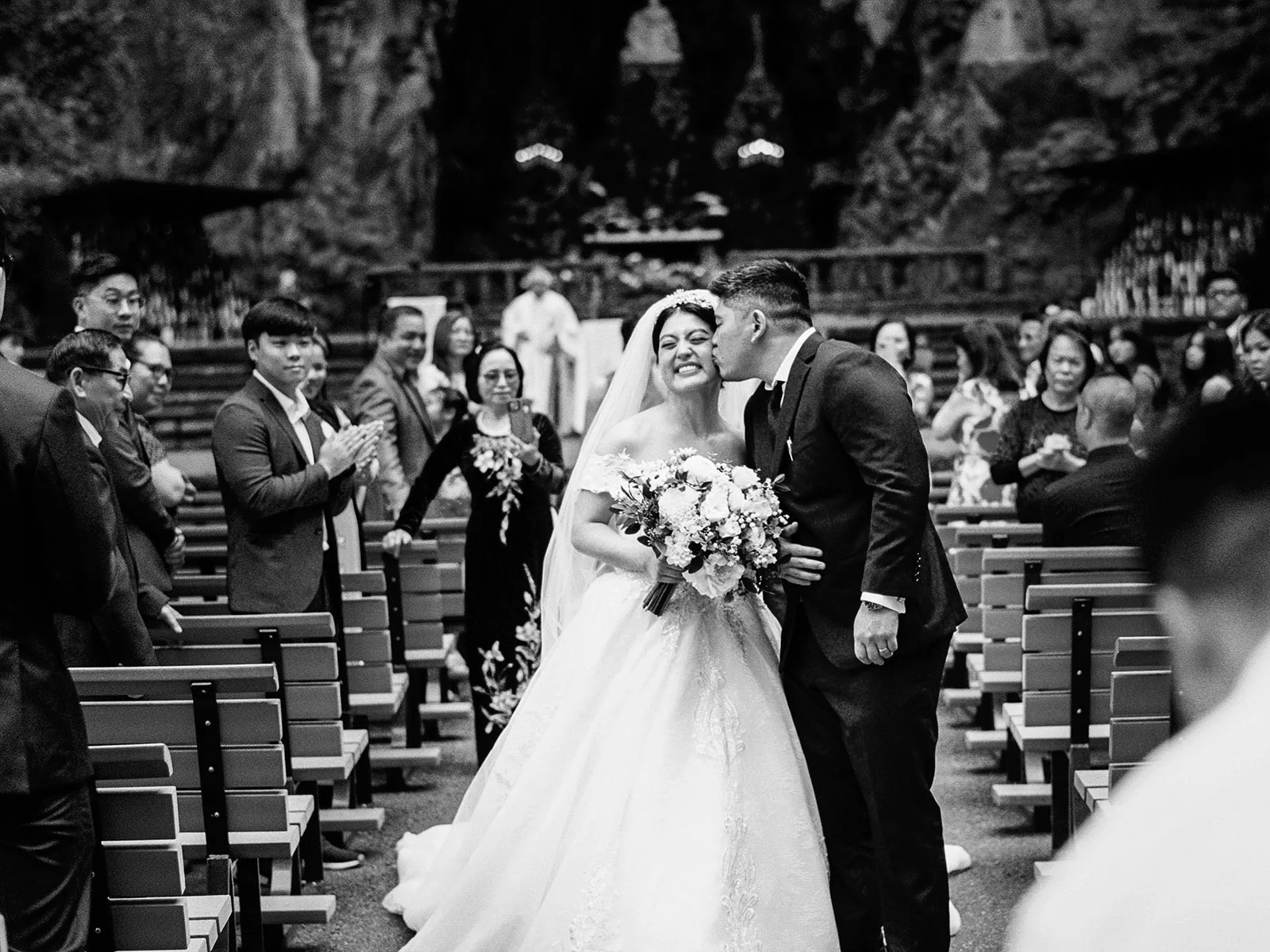
Every wedding comes with things you could include. That does not mean you must include all of them.
Maybe you genuinely want matching-robe photos with twelve bridesmaids. Great. Give them time.
Maybe you don’t care about doing a cake cutting or a performative first dance where everyone and their mom—literally—is looking at you. Also great. Use that time for something else.
The same goes for giant family-photo lists, multiple locations, and traditions that only made the schedule because someone said, “Everyone does it.”
A timeline doesn’t create more hours, but it does create space for the things you actually care about.
Build in Time for the Inevitable Nonsense
Something will run late. It just happens. Hair takes longer than expected. A button comes loose. The shuttle misses a turn. Someone important disappears immediately before family photos despite having received several emails, a printed schedule, and firm eye contact from your Asian mom.
A little buffer keeps one delay from knocking down every domino after it. Now, don’t misunderstand. This doesn’t mean leaving mysterious empty hours in random places. It means allowing time for realistic transitions and avoiding a schedule where every activity ends at the exact minute the next one begins.
Let it serve YOU. Let it give you a chance to eat something, use the bathroom, talk to your grandmother without feeling rushed, or spend ten quiet minutes with the person you just married. In fact, a mini Zen moment to breathe it all in should be scheduled into every wedding timeline.
The Wedding Power Move I Bet You Haven’t Tried
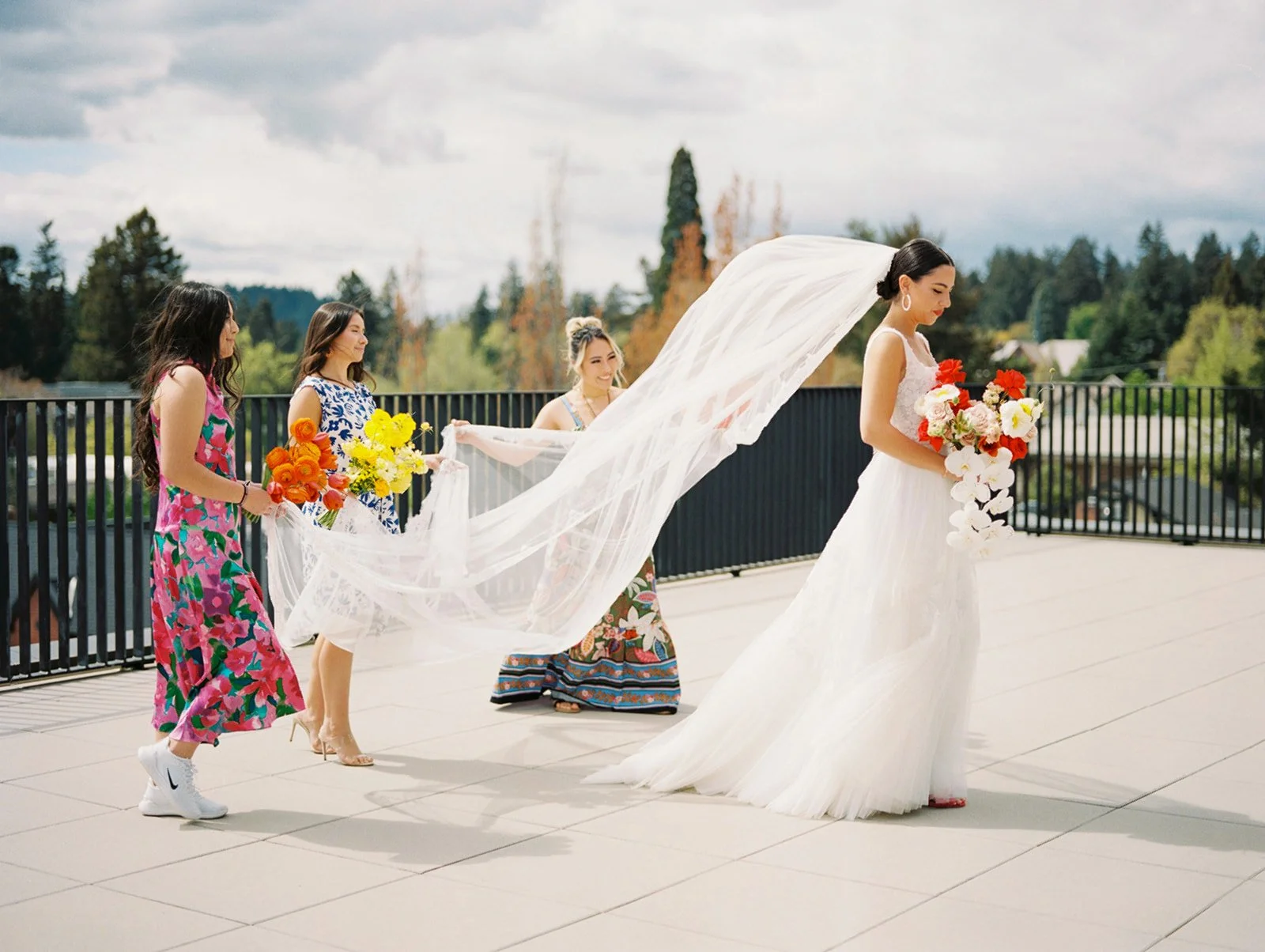
A wedding timeline is not just for you.
It becomes your silent personal assistant that you can refer people to when they have a question.
What time does the wedding party need to be fully dressed? The wedding timeline can tell you that.
When and where should family members gather for photos? The wedding timeline can tell you that.
The florist knows when setup needs to be finished because why? The wedding timeline can tell you that.
When everyone has the information they need, fewer decisions and questions make their way back to you.
Your planner or coordinator should have the complete master timeline. Other people only need the parts that involve them. The groomsmen especially don’t need or want a minute-by-minute account of the floral installation progress, but they should know when to be dressed and where their bodies are expected to appear.
Give him a fancy name, even. Telling people, “Go ask Sir Albert Weathersville III,” any time they have a query is a power move I bet you haven’t tried.
Real Moments Need Space to Grow
A good timeline doesn’t magically create meaningful photographs, but it gives those photographs somewhere to happen. Organic, emotive moments need breathing room and an experienced photographer. Give them time to bubble up and rise to the surface. Let them simmer like your aunt’s famous red-wine sauce.
If couple portraits are important to you, protect enough time for them. If you want photographs with a large extended family, make a list and assign someone who knows those people to help gather them. If you want to enjoy cocktail hour, decide which photos can happen earlier.
And if the day runs late, knowing your priorities helps your photographer and planner decide what can be shortened without sacrificing the things you care about most.
That is so much more useful than trying to cram the original plan into half the time while everyone becomes increasingly sweaty and hangry.
Your Timeline Is an Employee, Not Your Boss
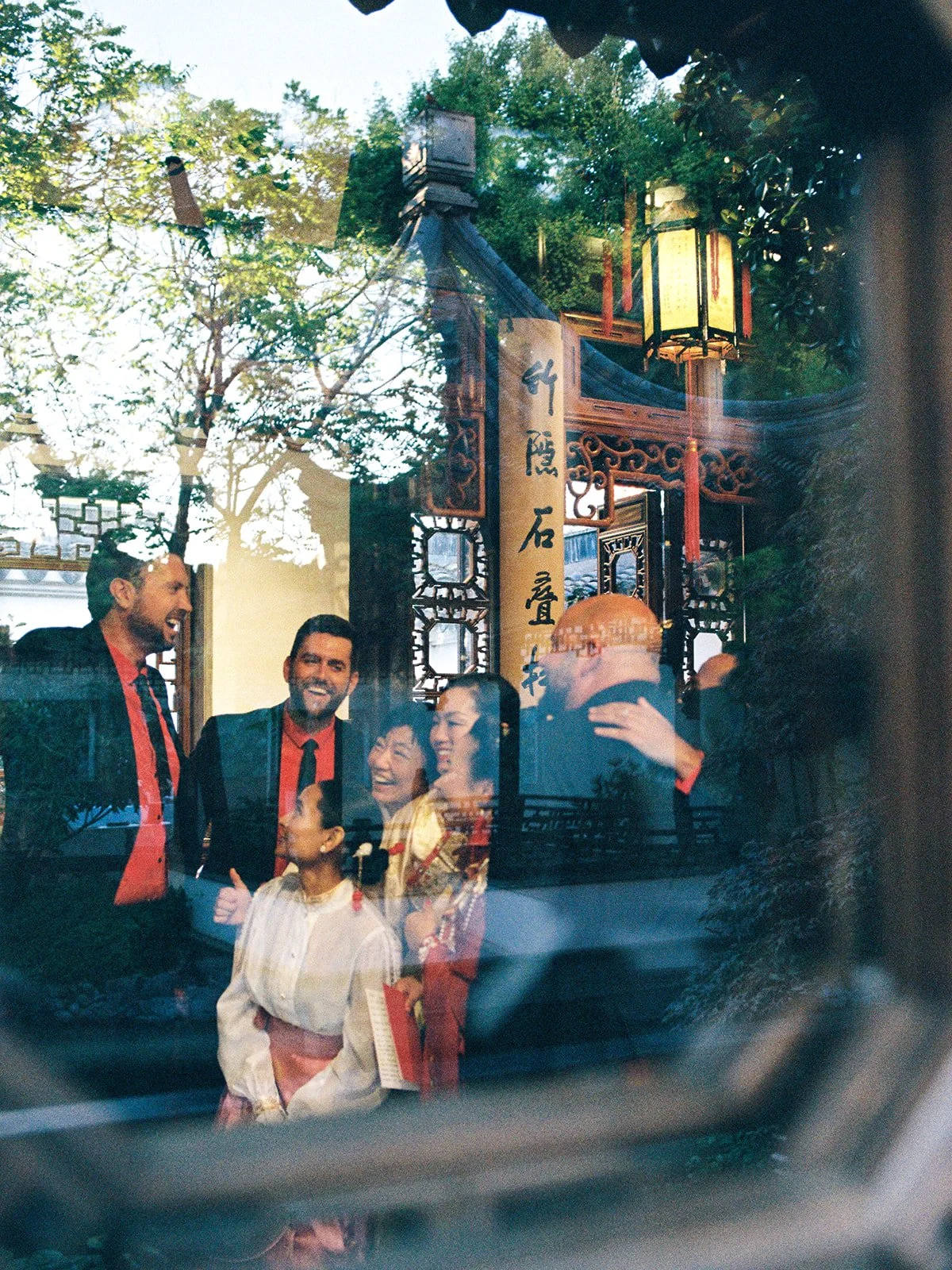
While a wedding timeline can be incredibly useful, it’s not there to boss you around. It’s there to give clarity without making your wedding day militant. It protects what matters to you, gives your vendors the information they need, and saves you from answering one hundred logistical questions in formalwear.
As a Portland wedding photographer when I help my couples build their custom wedding timelines, we start with their priorities and work backward from there. The goal is not to squeeze in every photograph a wedding could theoretically hold. It’s to make space for the people, traditions, celebrations, and photographs that will mean the most to them.
Planning a colorful or cultural wedding in Portland or elsewhere in the Pacific Northwest? Tell me what you’re dreaming up.